
 News
Views: 0 Author: Site Editor Publish Time: 2026-09-29 Origin: Site


Operating in contested environments means navigating not just isolated jammers, but highly coordinated, multi-directional electronic warfare (EW) threats. Traditional RF filtering methods fail quickly when confronted by multiple broadband jammers transmitting directly on GNSS frequencies. Standard bandpass filters simply cannot block in-band interference without blinding the receiver entirely. Securing Position, Navigation, and Timing (PNT) data now requires advanced spatial processing. You need intelligent systems capable of identifying and neutralizing diverse attacks in real time to ensure mission continuity. This guide breaks down exactly how Controlled Reception Pattern Antennas (CRPAs) neutralize multiple simultaneous threats effectively. It explores the physical engineering constraints of different array sizes to help you scale your platform defenses accurately. Finally, we establish the core evaluation criteria necessary for shortlisting the right anti-jamming system for high-stakes deployments, ensuring you balance protection against physical footprint limitations.
Spatial processing (null-steering) enables a GPS anti-jamming antenna to mathematically cancel out specific directions of interference while tracking legitimate satellite signals.
The number of interference sources a system can simultaneously block is dictated by its antenna elements; a standard rule is an *N-element* antenna can handle *N-1* jammers.
Upgrading from a 4-element CRPA antenna to an 8-element CRPA antenna drastically improves resilience in complex threat environments but introduces specific SWaP-C (Size, Weight, Power, and Cost) trade-offs.
Combining multi-constellation support (e.g., a GPS GLONASS anti-jamming antenna) with CRPA technology provides critical frequency diversity, reducing the likelihood of total PNT denial.
Standard fixed-reception antennas rely heavily on basic bandpass filters to maintain signal clarity. They only successfully block out-of-band interference. Multiple in-band jammers easily overwhelm these legacy components. Adversaries actively deploy continuous wave, swept-band, or pulsed interference to disrupt navigation. They specifically target the critical L1 and L2 spectrums. Once the noise floor rises beyond a specific threshold, the receiver loses its tracking lock. Your platform goes blind. A viable decision-stage solution must dynamically adapt to moving jammers. You need to handle multiple interference vectors simultaneously to survive modern operational theaters.
Furthermore, the system must maintain PNT accuracy without introducing unacceptable latency. If the processor lags while calculating interference paths, navigation errors compound rapidly. This leads directly to mission failure in high-speed applications like aviation or missile guidance. We must migrate our approach from frequency-domain filtering to spatial-domain processing. Modern jamming swarms emit powerful signals across the exact frequencies we need to operate. A robust GPS Anti-Jamming Antenna solves this critical vulnerability. It analyzes exactly where the signal originates in physical space, rather than merely attempting to filter its frequency.
Engineers often notice a false sense of security when deploying simple RF filters. These filters handle accidental interference from nearby radio towers well. However, they offer zero protection against malicious actors aiming noise directly into the GNSS band. The transition to spatial processing acknowledges a harsh reality. We cannot simply filter out the noise; we must actively map the electromagnetic environment and mathematically reject hostile vectors.
A Controlled Reception Pattern Antenna (CRPA) relies completely on spatial diversity to protect receivers. The antenna array receives incoming RF signals at slightly different times across its physical surface. Internal anti-jamming electronics meticulously measure these minute phase differences. The processor then computes the exact direction of incoming high-power interference. This computation happens continuously, updating hundreds of times per second.
Once the processor identifies a threat vector, the system mathematically combines the raw signals from different elements. This creates "nulls" or targeted blind spots in the antenna's reception pattern. The algorithm aims these deep nulls directly at the jammers. As the hostile jammers move across the horizon, or as your own platform maneuvers, the nulls track and block them continuously. Nulling effectively blocks the bad signals before they ever reach the delicate receiver.
Advanced systems also utilize a technique called beamforming alongside null-steering. While nulling eliminates hostile noise, beamforming artificially amplifies gain in the specific direction of legitimate GNSS satellites. This preserves your critical signal-to-noise ratio (SNR). You maintain clear visibility of the satellites you actually need, even while surrounded by heavy EW noise. Beamforming ensures the receiver holds a strong tracking lock during aggressive maneuvers.
Engineering physics dictate this nulling capacity through a strict mathematical baseline known as the N-1 rule. An array requires N physical elements to effectively counter N-1 distinct directional interference sources. For example, a three-element array successfully blocks two distinct jamming directions. A four-element array handles three. This fundamental math drives all system selection and scaling decisions. You cannot cheat the physics of spatial processing; if the number of distinct jammer locations exceeds your N-1 capacity, residual noise will inevitably leak into the system.
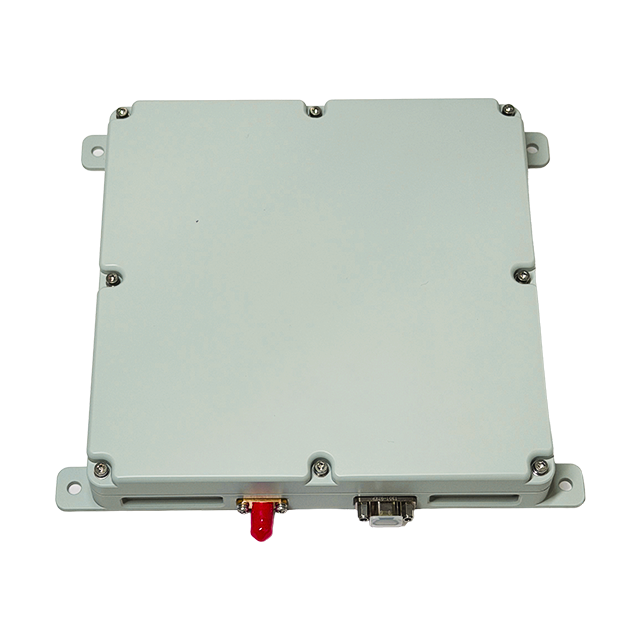
You must balance protective capability against anticipated threat density when sizing your antenna array. A 4-element CRPA antenna generates up to 3 simultaneous nulls. It perfectly suits tactical UAVs, standard ground vehicles, and automated logistics platforms. You deploy it primarily where localized, small-scale jamming is expected. It offers a much lower physical footprint and a highly manageable power draw. This makes fleet-wide scaling highly cost-effective without burdening vehicle battery systems.
Conversely, an 8-element CRPA antenna generates up to 7 simultaneous nulls. It actively serves high-value assets, advanced fighter aircraft, and critical naval vessels. Deep contested zones demand this specific element density. The larger array provides superior spatial resolution. Generating multiple nulls across a larger aperture causes significantly less collateral signal loss. You gain a drastically higher Jamming-to-Signal (J/S) tolerance, allowing operations near immensely powerful EW emitters.
Larger arrays offer exponential protection, but they also demand rigorous footprint evaluations. You cannot ignore the physical realities of integration. 8-element systems require larger radomes to house the extended geometry. They demand heavier phase-matched RF cabling, which impacts vehicle weight limits. The host vehicle must also supply higher power to drive the complex internal processing. Engineers must weigh these integration challenges carefully during the early design phases.
Feature Category | 4-Element CRPA System | 8-Element CRPA System |
|---|---|---|
Maximum Simultaneous Nulls | Up to 3 | Up to 7 |
Primary Use Case | Tactical UAVs, ground transport | High-value aircraft, naval vessels |
Spatial Resolution | Standard | Superior (Minimal collateral signal loss) |
Integration Footprint | Compact, lightweight radome | Requires larger radome and heavier cabling |
Null-steering effectively handles spatial threats by blocking specific directions. Multi-constellation processing handles spectral threats by expanding usable frequencies. You need both mechanisms to survive modern, sophisticated EW attacks. Relying on a single constellation leaves a critical vulnerability open. A comprehensive GPS GLONASS anti-jamming antenna processes multiple satellite constellations simultaneously. It monitors the entire available spectrum for optimal positioning data.
What happens if an adversary saturates the GPS L1 and L2 bands completely? The multi-constellation system immediately falls back on GLONASS, Galileo, or BeiDou frequencies. This frequency diversity keeps you operational when narrow-band jammers attack. An attacker might possess enough power to jam L1 across the entire horizon. However, jamming L1, L2, L5, G1, and G2 simultaneously requires massive energy output and massive hardware scale.
No system is mathematically immune to jamming. Absolute immunity does not exist in practical RF engineering. Given enough power and proximity, any receiver will eventually fail. However, combining a 4- or 8-element CRPA with multi-constellation receivers transforms battlefield dynamics completely. It raises the required energy and complexity for an adversary to successfully deny PNT by an entire order of magnitude. Defeating this combined setup requires immense power and perfect coordination. Most hostile threats simply fail to achieve this level of sophistication in real-world deployments.
We see this principle validated repeatedly in field trials. When testers subject a single-frequency CRPA to a wideband barrage, it survives longer than a standard antenna but eventually succumbs. When testers subject a dual-constellation CRPA to the same barrage, the system intelligently shifts its focus to the less congested constellation. It maintains a secure PNT lock, proving that spectral diversity acts as the ultimate safety net for spatial processing.
Selecting the right defense requires systematic evaluation against rigorous engineering standards. You must evaluate systems across several strict dimensions before finalizing a deployment architecture.
Convergence Time: Look closely at how fast the system detects a new jammer. It must form a stable null in milliseconds. Slow convergence causes immediate receiver lock loss. If the jammer pulses on and off rapidly, a slow system will constantly drop tracking.
Dynamic Performance: The system must maintain precise nulls during high-g maneuvers. Rapid platform banking tests the processor's computational limits. This remains absolutely crucial for aviation and missile systems, where the angle of incoming interference shifts wildly per second.
Integration with INS: Assess how seamlessly the antenna feeds data to an Inertial Navigation System (INS). You need tight sensor fusion during total GNSS denial. A well-integrated system uses INS data to aid the CRPA in holding satellite tracking loops longer.
You also face severe implementation risks during vehicle integration. Platform masking occurs when the vehicle's own structure physically blocks satellite visibility. This structure might also reflect jammer signals, creating severe multipath errors. This reflected noise completely confuses the CRPA algorithm, causing it to steer nulls in the wrong direction. Engineers must carefully model antenna placement to avoid vertical tail fins or weapon pylons.
Cable calibration errors present another major integration risk. You must strictly maintain phase-matched cables between the antenna elements and the processor. Minor physical damage, tight bend radiuses, or extreme thermal expansion severely degrades nulling capability. If the phase relationship alters between the cables, the processor miscalculates the threat direction.
For your next steps, request detailed J/S tolerance testing data from short-listed vendors. Do not rely solely on marketing brochures. Schedule rigorous field trials in verified anechoic chambers to simulate multi-directional attacks safely. Finally, audit strict SWaP constraints with your mechanical engineering teams early in the design cycle. Retrofitting a heavy 8-element system into a lightweight drone usually fails.
Defeating multiple simultaneous jammers presents a strict mathematical challenge. You solve this challenge through precise element density (CRPA) and broad frequency diversity (multi-constellation support). Legacy filters simply cannot manage modern, in-band jamming swarms effectively.
Your final decision logic relies on operational context. Choose a 4-element system for standard, SWaP-constrained tactical mobility where threats remain localized. Scale up to an 8-element system for high-value, heavily contested theater operations where adversary capabilities remain severe and multi-directional.
Do not leave your PNT security to chance or delay critical upgrades. Contact an applications engineer today to discuss your specific mission profile. Download comprehensive technical data sheets to compare exact J/S thresholds for your unique platform requirements.
A: The system degrades gracefully. It will prioritize nulling the most powerful interference sources first. However, residual noise from un-nulled jammers may raise the overall noise floor, eventually causing the GNSS receiver to lose its tracking lock.
A: Yes, many modern CRPAs treat spoofers as standard interference sources. Because spoofed signals usually originate from a single terrestrial point rather than orbit, spatial processing easily identifies the anomalous angle of arrival and nulls the spoofed signal completely.
A: Not always. Many anti-jamming systems operate in-line as "RF-in, RF-out" devices, meaning they output a cleaned RF signal to standard legacy receivers. However, tightly coupled systems offer much faster convergence and superior overall protection.


