
 News
News Views: 0 Author: Site Editor Publish Time: 2026-09-15 Origin: Site


Urban UAV operations navigate incredibly high-stakes environments every single day. Package delivery fleets, critical infrastructure inspections, and emergency first responder missions depend completely on flawless aerial execution. Even a momentary navigation glitch can cause catastrophic operational failure in these densely populated areas. The core threat here is the sudden loss of precise Position, Navigation, and Timing (PNT) data. Tall buildings in urban canyons create severe multipath interference. Meanwhile, illegal, localized RF jamming easily corrupts weak satellite signals. Drones simply cannot fly safely when they lose their primary navigation fix. Fortunately, advanced hardware offers a robust solution to this growing crisis. Integrating a specialized GNSS Anti-Jamming Antenna provides a critical redundancy component for modern drone platforms. Read on to discover how upgrading your systems ensures safe, compliant, and autonomous urban flights beyond visual line of sight (BVLOS).
Urban UAVs face compounded PNT threats from both accidental signal reflection (multipath) and deliberate localized jamming.
Upgrading to a dedicated GNSS anti-jamming antenna minimizes the risk of flyaways, mission failure, and regulatory non-compliance.
Evaluating a solution requires balancing SWaP (Size, Weight, and Power) constraints with the required level of interference mitigation (e.g., standard filtering vs. CRPA).
Successful integration demands rigorous EMI (Electromagnetic Interference) shielding and compatibility testing with the UAV's existing flight controller.
Flying drones through dense cityscapes presents immediate physical and invisible challenges. Tall concrete and steel structures physically block direct lines of sight to orbiting satellites. This obstruction forces your receiver to rely on bounced signals. We call this phenomenon multipath interference. Because the signal reflects off buildings before reaching the drone, it arrives slightly delayed. This micro-delay confuses standard receivers, causing dangerous positional drift. Your drone might think it is flying over a road when it is actually drifting toward a skyscraper window.
Accidental interference is not your only worry in urban spaces. Deliberate localized jamming introduces a severe and unpredictable threat. Many citizens illegally purchase cheap personal privacy jammers. They plug these devices into vehicles to mask their locations from employers or authorities. Unfortunately, these jammers blast overpowering noise across standard GPS frequencies. When your UAV flies near one of these active jammers, the drone goes completely blind. The proliferation of these cheap devices turns city blocks into unpredictable dead zones for autonomous flight.
Losing a stable GNSS lock carries immense business and safety risks. When drones lose their positioning hold, they often execute emergency landing protocols. In a busy city, a sudden descent risks severe property damage and civilian injury. Furthermore, unmitigated flyaways can result in complete drone loss and the destruction of expensive sensor payloads. Regulatory bodies also closely monitor these failures. Frequent PNT losses can quickly lead to grounded fleets, revoked BVLOS waivers, and steep regulatory fines. You must protect your operations from these costly outcomes.
To safely navigate these zones, you must establish clear success criteria for your navigation hardware. A resilient system must maintain a continuous 3D positioning hold during temporary interference. If the drone completely loses connection, the hardware must ensure rapid signal re-acquisition the moment interference clears. Additionally, you must achieve this resilience while incurring a minimal payload penalty. Drones have strict weight limits, so bulky hardware compromises flight time. True operational success means balancing robust protection against minimal impact on the airframe.
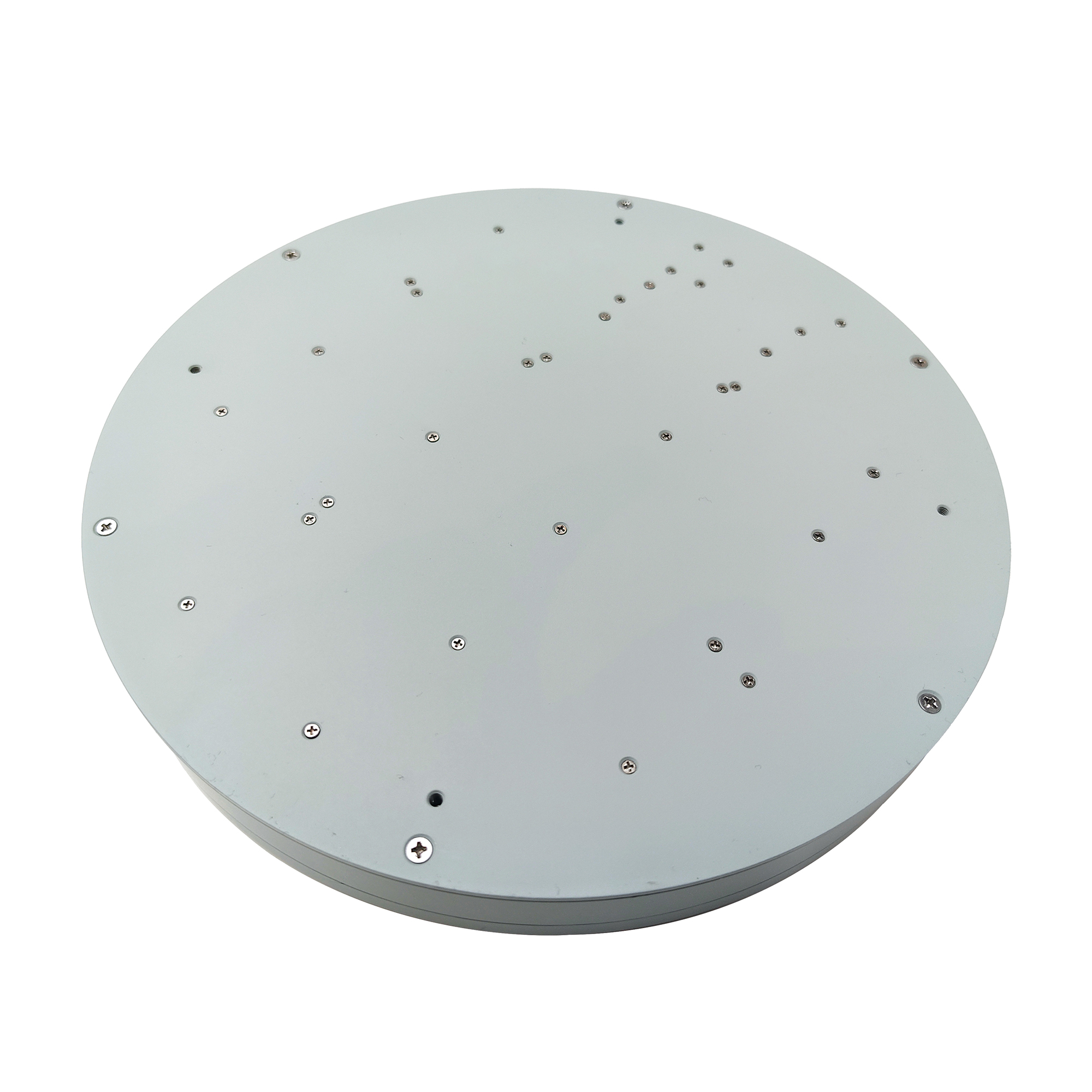
Standard GNSS antennas operate like simple microphones. They passively listen to all signals falling within their frequency range. When the local noise floor rises due to urban clutter or deliberate jamming, these basic antennas become overwhelmed. They cannot filter out aggressive interference, leaving the flight controller starved of data. To fix this, you need hardware built for hostile airspace. Integrating a dedicated satellite navigation anti-jamming antenna transforms your navigation system from a passive listener into an active shield. These advanced units actively fight back against rising noise.
Advanced antennas utilize a clever mathematical trick called null steering. Instead of just receiving signals, they actively analyze the direction of incoming radio waves. When the antenna detects a loud, hostile jamming signal, it mathematically alters its reception pattern. It creates a "null" or a blind spot pointing directly at the jammer. By turning a deaf ear to the specific direction of the interference, the antenna preserves its ability to hear quiet satellite signals from other directions. This directional filtering keeps your drone locked onto its path.
While null steering blocks bad signals, beamforming actively enhances the good ones. Modern anti-jamming antennas use multiple receiving elements working together. The internal processor aligns the phases of incoming satellite signals constructively. This process amplifies the genuine signal amidst high urban background noise. Think of it like cupping your hands around your ears in a crowded room. You focus directly on the voice you want to hear. Beamforming ensures your drone maintains a crisp, clear connection to orbiting satellites even in noisy environments.
No single sensor guarantees perfect autonomy. You must build layered defenses. Anti-jamming antennas serve as your critical primary layer of defense. They keep your core GNSS data flowing smoothly. When jamming becomes overwhelmingly strong, secondary systems finally take over. Inertial Navigation Systems (INS) and optical flow sensors rely on the last known good GNSS coordinate to function accurately. By protecting your primary GNSS feed as long as possible, you give your backup sensors the most accurate starting data possible.
When selecting hardware, you must decide between standard filtered antennas and active array systems. Simple single-element antennas use robust bandpass filters to block out-of-band noise. However, they fail against in-band jammers. For true resilience, operators often step up to a CRPA anti-jamming antenna. Controlled Reception Pattern Antennas feature multiple active elements on a single board. They execute complex null steering algorithms in real-time. If you fly critical missions over major city centers, CRPA technology is usually a strict operational requirement.
Relying solely on one satellite network leaves you vulnerable. Urban canyons frequently block massive sections of the sky. To maximize your visible satellites, you must track multiple constellations simultaneously. A robust multi-constellation anti-jamming antenna secures signals from GPS, GLONASS, Galileo, and BeiDou all at once. If a tall building blocks the GPS satellites in the southern sky, your drone seamlessly shifts reliance to Galileo satellites overhead. This diverse tracking capability ensures continuous satellite availability in highly occluded urban skies.
Upgrading drone hardware requires meticulous planning around SWaP limits. You cannot simply bolt heavy military gear onto a commercial quadcopter. Evaluate these three critical factors:
Weight: Every extra gram reduces your drone's maximum flight time. Heavy antennas directly diminish your payload capacity, meaning you carry fewer packages or lighter cameras.
Power: Active antennas require electricity to run their processors. You must calculate the energy draw requirements from the UAV’s core power distribution board to avoid battery drain.
Size: A bulky antenna creates unwanted drag. You must consider the aerodynamic impact and find sufficient physical real estate on small-to-medium drone frames.
Manufacturer specification sheets can be dense, but you must focus on interference rejection ratios. Engineers measure jamming immunity in decibels (dB). A higher dB rejection ratio means the antenna can ignore louder jammers. Review the objective thresholds provided by the manufacturer to ensure they match your expected threat environment.
Typical Interference Mitigation Thresholds by Antenna Grade
Antenna Grade | Primary Mitigation Technique | Average Rejection (dB) | Ideal UAV Profile |
|---|---|---|---|
Standard Commercial | Passive Bandpass Filtering | 0 - 15 dB | Rural mapping, Visual Line of Sight |
Advanced Single-Element | Active Filtering & Amplification | 15 - 35 dB | Suburban inspection, light delivery |
CRPA Array (4-Element) | Null Steering & Beamforming | 40 - 70 dB | Urban BVLOS, critical infrastructure |
Tactical Multi-Element | Advanced Spatial Processing | 75+ dB | Heavy lift, first responder, tactical ops |
External jammers are not the only threat to your navigation system. Often, the drone accidentally jams itself. We call this self-induced Electromagnetic Interference (EMI). Modern drones pack powerful electric motors, high-wattage telemetry radios, and high-definition video transmitters into tiny frames. These components constantly emit strong RF fields. If you install an anti-jamming antenna without proper shielding, the drone’s own internal noise will overwhelm it. You must route cables carefully and apply copper shielding tape to noisy internal components.
Physical placement dictates antenna performance. You cannot mount a sensitive receiver right next to a spinning motor or a broadcasting video antenna. Best practices require maximizing physical separation between transmitters and receivers. Furthermore, many advanced antennas require a proper ground plane to function optimally. You must follow the manufacturer's mounting guidelines precisely. Placing the antenna at the highest possible point on the airframe usually provides the clearest view of the sky and the best defense against ground-based jammers.
Buying the best antenna achieves nothing if your flight controller cannot read its data. You must guarantee seamless firmware compatibility. Before purchasing, verify the antenna's output protocols. Most commercial flight controllers, like Pixhawk or DJI platforms, require standard NMEA strings or RTCM correction data. Custom proprietary boards might require specialized baud rates or serial connections. Ensure your engineering team can integrate the data stream seamlessly into your existing navigation stack without requiring heavy custom coding.
Never deploy untested hardware over a populated city. You must validate your new GNSS anti-jamming antenna thoroughly. However, broadcasting live jamming signals outdoors is highly illegal in almost all jurisdictions. Therefore, you must conduct spoofing and jamming simulations inside controlled environments. Use isolated RF anechoic chambers to blast the drone with simulated noise. Verify that the flight controller reacts properly, triggers the correct failsafes, and recovers seamlessly when the simulated jamming ceases.
Avoid over-engineering your fleet if it is not necessary. You must differentiate between lightweight commercial needs and highly critical operations. If your drones perform basic park mapping or real estate photography, a lightweight, advanced single-element antenna provides sufficient protection. However, if you transport medical supplies, human tissue, or perform tactical emergency responses, you cannot compromise. These critical missions demand robust multi-element CRPA solutions to guarantee arrival regardless of the local RF environment.
The aviation industry runs on trust and verifiable safety metrics. Do not buy cheap, unverified hardware for commercial fleets. Evaluate manufacturers based on hard, verifiable test data. Ask vendors for their Mean Time Between Failures (MTBF) statistics. Furthermore, ensure their hardware aligns with emerging safety mandates from aviation authorities like the FAA or EASA. A reputable vendor will gladly provide laboratory test results proving their decibel rejection claims and environmental durability standards.
Operating autonomous UAVs in dense urban environments is simply no longer viable with unprotected standard receivers. The combined threats of multipath reflections and malicious local jammers create unacceptable risks for commercial operators. As you upgrade your fleet, selecting the right hardware requires a pragmatic balance. You must weigh strict SWaP limits against the need for advanced threat mitigation techniques like CRPA null steering and diverse multi-constellation support.
Audit your current UAV fleet's specific PNT resilience levels immediately.
Identify the RF threat density in your primary urban flight corridors.
Request technical specification sheets from reputable vendors to compare decibel rejection ratios.
Plan controlled RF chamber testing before seeking expanded BVLOS regulatory approvals.
A: Standard antennas passively receive signals across a broad spectrum, making them vulnerable to loud noise. CRPAs use multiple active elements to mathematically analyze incoming signals. They deliberately cancel out interference from specific directions while amplifying valid satellite signals.
A: Modern units are optimized for UAVs, typically drawing minimal power (often under a few watts). While they are highly efficient, operators must still carefully factor this energy draw into overall SWaP calculations to prevent unexpected flight time reductions.
A: While primarily designed to block overpowering noise (jamming), advanced directional antennas offer secondary protections. By analyzing the angle of arrival, they can detect and ignore deceptive signals (spoofing) that originate from the ground rather than from space.
A: Testing must be done inside isolated RF chambers or using strictly controlled wired simulators. Broadcasting actual jamming signals outdoors is highly illegal in most jurisdictions and can severely disrupt local aviation and emergency services.


