
 News
News Views: 0 Author: Site Editor Publish Time: 2026-07-14 Origin: Site


Modern precision agriculture relies heavily on centimeter-level Real-Time Kinematic (RTK) and GNSS positioning. When these signals drop, automated spraying, mapping, and seeding operations fail instantly. The proliferation of cheap GPS jammers, unintentional RF interference, and tactical electronic warfare spillover from nearby military or border installations cause critical navigation dropouts. You face drone flyaways, payload loss, and severe operational downtime when receivers lose lock. Securing high-value UAV fleets requires moving beyond standard patch receivers. This guide breaks down how to evaluate, select, and integrate commercial-grade hardware to ensure continuous, reliable autonomous operations in contested RF environments. We will look at the exact specifications needed to keep your heavy-lift multi-rotors in the air when the spectrum gets crowded.
Hardware vs. Software: Effective agricultural drone protection requires a combination of hardware-based spatial filtering (such as multi-element CRPA) and advanced receiver-level firmware algorithms to reject complex interference.
SWaP-C is the Deciding Factor: Selecting an anti-jamming antenna requires balancing Size, Weight, Power, and Cost with the drone’s payload capacity, battery chemistry, and flight-time requirements.
Sensor Fusion is Essential: For maximum resilience, a GNSS anti-jamming antenna should interface with Inertial Navigation Systems (INS) to provide dead-reckoning fallback capability in full signal denial scenarios.
Multi-Constellation, Multi-Frequency Redundancy: The most resilient setups do not rely on GPS L1 alone; they leverage multi-frequency (L1, L2, L5), multi-constellation (GPS, GLONASS, Galileo, BeiDou) receivers to maintain positioning locks during localized jamming events.
Precision agriculture demands uninterrupted RTK carrier-phase lock. Success means maintaining sub-decimeter navigation integrity in contested RF environments. Without a robust anti-jamming antenna, UAVs are vulnerable to a wide array of signal disruptions. You need a system that holds a 10Hz update rate even when the signal-to-noise ratio degrades.
Unintentional interference often stems from rural sources. High-power cellular transmitters, poorly shielded farm machinery electronics, high-voltage power lines, and local point-to-point radio links generate harmonic distortion. These sources overwhelm sensitive GNSS receivers. When a drone flies over a 500kV transmission line, the electromagnetic field can induce noise directly into the antenna element.
Intentional threats include privacy-seeking personal jammers operated by nearby properties or highway motorists. Deliberate unauthorized RF denial is also common. These devices emit strong signals designed to block GNSS reception over a localized area. A simple 1-watt jammer plugged into a tractor's cigarette lighter can knock out RTK corrections over a two-mile radius.
Agricultural fields near national borders, shipping corridors, or military testing ranges frequently experience collateral GPS jamming and spoofing from state-level military activities. This geopolitical spillover necessitates advanced GNSS anti-jamming solutions to maintain operational continuity. We see farms hundreds of miles from active conflict zones losing satellite locks because high-altitude EW platforms broadcast wideband noise across the L-band spectrum.
Understanding the specific type of interference dictates the hardware response. Different threats require different mitigation strategies at the receiver level.
Threat Type | Characteristics | Impact on UAV Operations |
|---|---|---|
Narrowband Jamming | Single-frequency interference targeting specific bands (e.g., L1). Often continuous wave. | Loss of primary constellation lock. Forces fallback to secondary frequencies if available. |
Wideband/Chirp Jamming | Sweeping signals that block multiple frequencies simultaneously across the entire GNSS spectrum. | Complete loss of satellite positioning. Triggers immediate INS dead reckoning or manual takeover. |
Spoofing & Meaconing | Deceptive attacks broadcasting fake, time-synchronized coordinates. | Hijacks the autopilot. Tricks the UAV into flying off-course or executing emergency landings. |
Harmonic Interference | Unintentional noise from onboard electronics (ESCs, telemetry radios) bleeding into GNSS bands. | Degraded Signal-to-Noise Ratio (SNR). Causes intermittent RTK float/fix toggling. |
When a drone loses positioning, it experiences a cascade of failures. Immediate fallback to manual flight is often impossible for Beyond Visual Line of Sight (BVLOS) operations. This results in chemical drift, collision hazards, and uneven crop application. A 40-liter spray drone drifting off its programmed grid wastes expensive inputs and risks applying chemicals to adjacent, non-target crops.
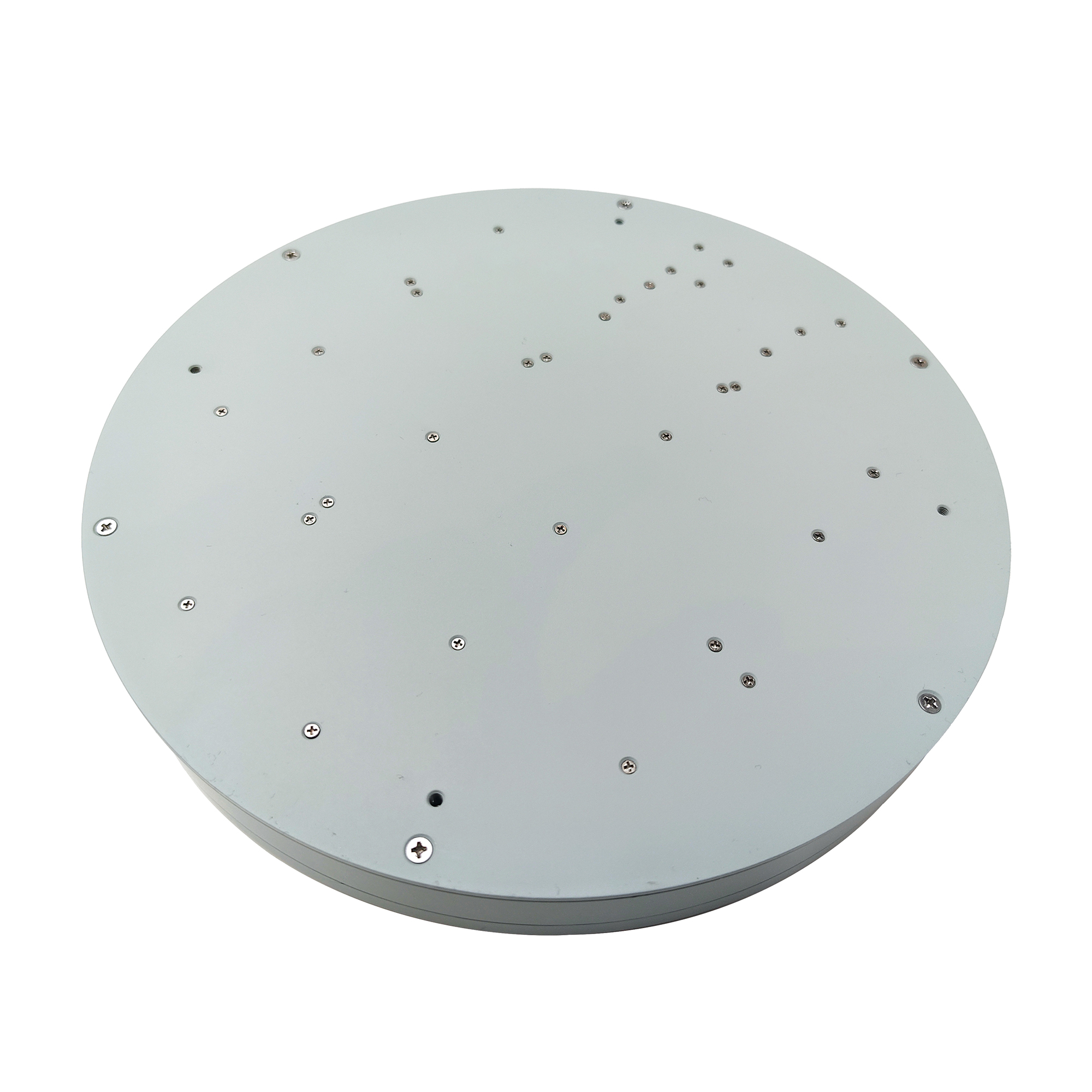
Understanding the technical mechanisms is necessary before evaluating hardware vendors for agricultural drone protection. You must look past marketing claims and examine the actual signal processing architecture.
Multi-element arrays use spatial filtering to identify the angle of arrival of interfering signals. They employ null steering to dynamically attenuate signals directed toward the source of interference. Simultaneously, they use beamforming to maximize gain toward healthy satellites. Although CRPA arrays are constrained by physical footprint limits, they remain the gold standard for high-performance anti-jamming protection.
A standard 4-element CRPA can typically project three distinct nulls. This means it can block three separate jamming sources simultaneously. The physical spacing of the antenna elements is dictated by the wavelength of the GNSS signals, which is why these units cannot be miniaturized beyond a certain physical limit without losing effectiveness.
Modern receiver firmware uses digital filters to isolate and mitigate threats before they reach the navigation engine. This happens in the digital domain after the analog signal is converted.
Adaptive Notch Filtering: The firmware continuously scans the frequency spectrum. When it detects a continuous wave or narrowband interference spike, it deploys a narrow digital filter to cut out that specific frequency while leaving the surrounding spectrum intact.
Pulse Blanking: High-power pulsed signals, like those from nearby aviation radar, can saturate the analog-to-digital converter (ADC). Pulse blanking temporarily zeroes out the input during the microsecond the pulse hits, preventing saturation.
Fast Fourier Transform (FFT) Analysis: The receiver performs real-time spectral analysis to characterize the noise floor and adjust amplifier gains dynamically.
Jamming is a denial-of-service attack that overpowers the signal. Spoofing is deception, feeding false coordinates to the receiver. Premium hardware must combine CRPA nulling with cryptographic signal verification and multi-vector anomaly detection to counter both threats effectively. If the receiver detects a sudden, physically impossible jump in the time-of-arrival data, it flags the signal as spoofed and discards it.
Assess vendor specifications against real-world agricultural scenarios using a structured framework. Do not rely on spec sheets alone; map the capabilities to your specific flight profiles.
Heavy multi-rotor spraying drones have strict payload limits. Adding a 150g lightweight micro-CRPA versus a 500g heavy-duty system impacts flight dynamics, motor heat, and battery drain. Active digital signal processing and null steering draw continuous wattage, impacting the drone’s high-voltage battery system. Map the unit efficiency of the GNSS anti-jamming antenna against the value of the drone, its payload, and the potential liability of crop damage.
A system drawing 15 watts continuously will noticeably reduce the flight time of a smaller scouting drone, whereas a large 50-liter spray platform might absorb that power draw without a significant operational penalty. You must calculate the exact power budget.
The Jamming-to-Signal (J/S) ratio is expressed in decibels (dB). Select a baseline J/S mitigation capability, such as 40 dB to 50 dB of suppression, to withstand close-range jammers. A 40 dB suppression means the antenna can handle interference that is 10,000 times stronger than the satellite signal. This is the minimum threshold for operating near highways where truck drivers use personal privacy jammers.
Secure not just GPS L1/L2, but also GLONASS, Galileo, and BeiDou signals across L1, L2, and L5 bands. This maximizes redundant positioning paths during localized jamming events. If a jammer targets the L1 band, a multi-frequency receiver seamlessly falls back to L2 or L5 to maintain the RTK fix. Single-frequency receivers drop out immediately under these conditions.
Evaluate how well the GNSS receiver interfaces with an onboard IMU (Inertial Measurement Unit). Tightly coupled GNSS/INS systems allow the drone to execute safe dead reckoning flight maneuvers if all satellite signals are completely blocked. The quality of the IMU dictates how long the drone can fly blind before the position drift becomes dangerous. A tactical-grade MEMS IMU can hold a stable position for several minutes without GNSS input.
Procurement and engineering teams must make critical system-level choices when upgrading fleets. The integration path determines the final reliability of the platform.
Retrofitting existing drone fleets with an aftermarket anti-jamming antenna involves routing new cables, modifying mounting brackets, and rewriting flight controller parameters. You have to ensure the new hardware communicates correctly over UART or CAN bus with the existing Pixhawk or proprietary flight controller. Purchasing newer UAV platforms with factory-integrated, resilient GNSS systems designed natively for secure agricultural operations often reduces engineering overhead and guarantees electromagnetic compatibility out of the box.
Using a passive multi-element antenna paired with an external, separate CRPA processor offers flexibility in mounting. You can place the antenna on the highest point of the airframe and bury the heavy processor near the center of gravity. Conversely, a smart integrated receiver system houses both the antenna array and the processing logic in a single, compact enclosure. This outputs clean NMEA positioning data directly to the autopilot, simplifying the wiring harness but concentrating the weight at the top of the drone.
Deploying complex electronic systems in agricultural environments presents technical hurdles. Field conditions expose hardware to vibration, moisture, and extreme temperatures.
Active spatial filtering circuits draw significant power, shortening battery life and reducing acreage covered per flight. Utilize dedicated step-down voltage regulators and conduct baseline power audits. Consider secondary power isolation layers for the flight-critical navigation stack. Do not power the anti-jamming hardware from the same rail as the high-current servos or pump motors, as voltage sags will cause the receiver to reboot mid-flight.
Data packet latencies or protocol mismatches between the anti-jamming receiver and open-source autopilots pose significant risks. Mandate vendor-supplied driver libraries and conduct extensive bench-testing of latency profiles before deploying fleet-wide firmware updates. If the receiver outputs NMEA 0183 messages at 1Hz but the flight controller expects UBX binary at 5Hz, the drone will experience severe control loop instability.
Placing the anti-jamming antenna too close to high-voltage electronic components can introduce self-interference. Ensure proper shielding and physical separation to maintain signal integrity. Mount the antenna on a rigid mast away from the Electronic Speed Controllers (ESCs) and telemetry transmitters. Use double-shielded coaxial cables and ensure the ground plane is adequately sized for the lower frequency L5 bands.
Conduct a comprehensive RF site survey using a spectrum analyzer to identify local interference sources before flight operations.
Perform a SWaP-C analysis specific to your UAV fleet's payload and power capabilities to ensure the hardware does not degrade flight dynamics.
Test candidate hardware in a controlled environment using an SDR to simulate jamming before field deployment.
Integrate INS failovers and tune the dead-reckoning parameters in the flight controller to guarantee safe navigation during total signal denial.
A: It is a specialized hardware system designed to detect, filter, and reject intentional and unintentional radio frequency interference. It uses spatial filtering and digital signal processing to ensure continuous satellite positioning in contested environments.
A: A Controlled Reception Pattern Antenna uses multiple physical elements to determine the angle of arrival of incoming interference. It dynamically creates RF nulls to block those specific signals while simultaneously enhancing legitimate satellite signals through beamforming.
A: Multi-frequency support allows the receiver to switch to alternative bands like L2 or L5 if the primary L1 band is jammed. This provides critical redundancy and ensures the RTK engine maintains a fixed solution during narrowband attacks.
A: While anti-jamming focuses on overpowering interference, premium systems combine spatial filtering with cryptographic verification and anomaly detection. This multi-layered approach identifies false coordinates and discards spoofed signals before they corrupt the navigation solution.
A: Yes, active processing, DSP chips, and spatial filtering require continuous power. You must evaluate the power consumption against the drone's battery capacity and utilize dedicated voltage regulators to prevent power sags during flight.


